
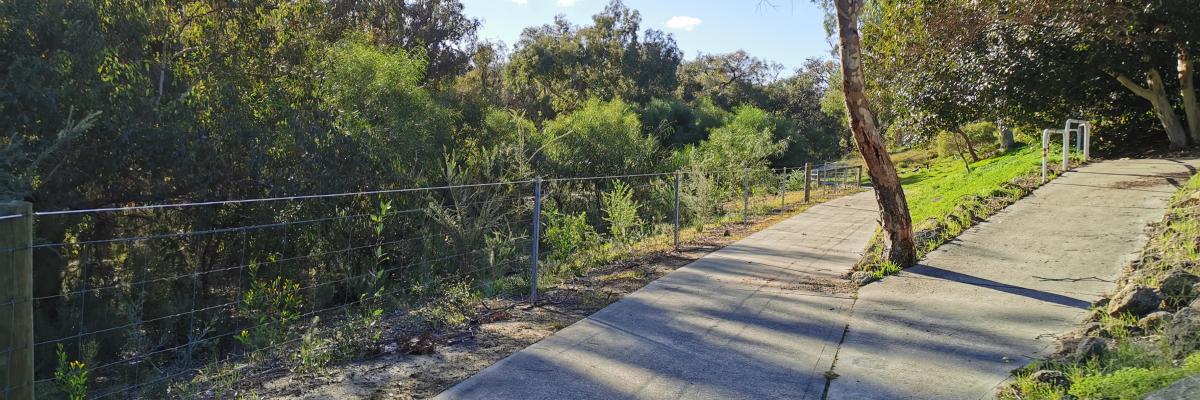
A four-year management plan is underway to restore the 10 hectares of foreshore between Burslem Drive Bridge and Corfield Street in Thornlie, where the Southern River meets the Canning River.
It is known as the Southern and Canning River Confluence Foreshore Reserve.
In April/May 2021, the City commissioned Natural Area Holdings to conduct a detailed flora and basic fauna survey and then prepare a foreshore management plan for the area. The management plan aims to restore the site to a natural environment that:
- Contains 80% endemic vegetation
- Improves the quality of water entering the Canning River
- Provides habitat for native fauna
- Produces a system that is tolerant to high and low water flows
- Promotes natural regeneration and is resilient to weed invasion.
It includes four management zones, with rehabilitation starting upstream and working downstream towards the Canning River. The Plan recommends 4.8 ha of the site be revegetated with about 116,000 plants, following intense weed control and site preparation works.
The site includes a portion of the Southern River and its buffer zone with a south to north direction of flow into the Canning River.
The Armadale Gosnells Landcare Group (AGLG) rehabilitated two sections of the site between 2016 and 2020, with funding from the Department of Biodiversity, Conservation and Attractions (DBCA), City of Gosnells and the Western Australia Planning Commission. This agreement at the time was one of the first collaborative approaches undertaken by all agencies. It has greatly enhanced the site, with the area now classified as being in ‘good’ condition.
The foreshore reserve contains two vegetation types:
- Corymbia calophylla (Marri) Woodland; and
- Melaleuca rhaphiophylla (Swamp Paperbark) and Eucalyptus rudis (Flooded Gum) Woodland.
The fauna survey identified Black Cockatoo feeding activity and Forest Red-tailed Black Cockatoos flying over the site. Carter’s Freshwater Mussel has been recorded in the Canning River, upstream of the site. Previous records show the presence of the Common Brushtail Possum, the South-western Snake Necked Turtle and the Priority 4 Quenda within the reserve
The site contains Bush Forever and forms part of the DBCA Swan and Canning River Development Control Area. The land is controlled by the Western Australian Planning Commission (WAPC), the City of Gosnells and the Department of Planning, Lands and Heritage (DPLH). All agencies share the same vision for improving the site.
Works on the horizon for 2021-22 for the Southern River Confluence will include:
- weed control in Zone 1
- targeted woody weed and declared pest weed control and general maintenance works across all zones
- revegetation within Zone 1
Southern and Canning River Confluence Foreshore Management Plan 2021
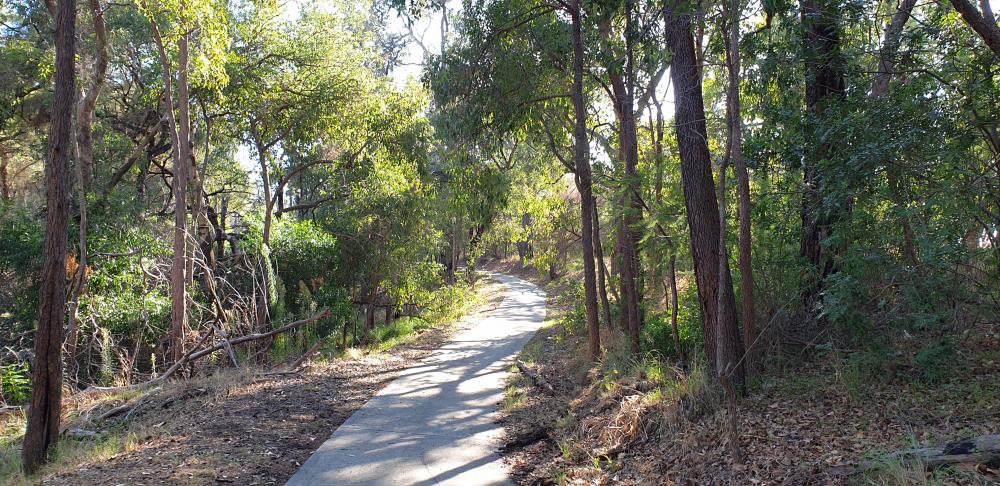
Southern and Canning River Confluence Foreshore Reserve
Gosnells WA 6110
Australia
 Subscribe to our eNewsletters